
Project Hail Mary Is Refreshingly Optimistic
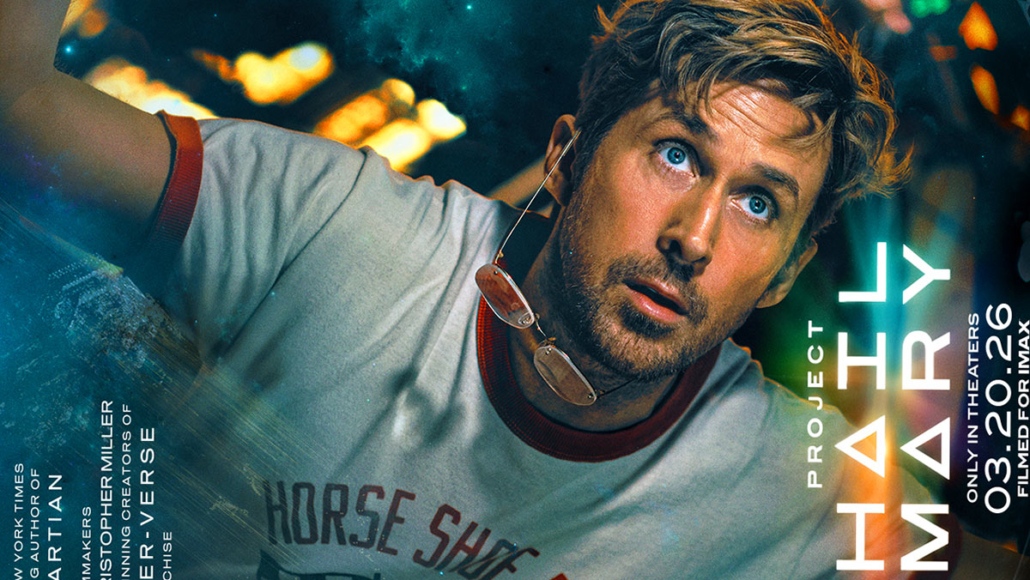
I recently had the pleasure of watching “Project Hail Mary” on the big screen with a close friend; it was one of the best experiences I’ve had in a movie theatre in a long time. The film is refreshingly optimistic, as my friend put it, and offers something much needed in our current climate of chaos and division. When viewed through a Christian lens (which the film itself seems to invite, given its title and the name of its protagonist) it emerges as a profoundly redemptive narrative: one that explores sacrifice, moral transformation, friendship across difference, and the triumph of love against all odds. Beneath its scientific exterior lies a drama that echoes the central themes of the Gospel.
Ryland Grace is a schoolteacher chosen to undertake a mission to save humanity from extinction. Initially, he is far from a willing hero. He is coerced into the mission because there is no one else with the scientific knowledge required to accomplish it. He is captured, placed into a coma, and the next thing he knows, he awakens alone on a spaceship, suffering from amnesia, with his crewmates dead.
His situation is one that resonates on a deeply human level. Like Grace, we often find ourselves thrust into circumstances beyond our control. Many would succumb to despair, yet a few – like Grace – choose to rise to the occasion and make something meaningful out of it. His character arc is therefore not one of static weakness, but of transformation. Over the course of the narrative, he moves from self-preservation to self-sacrifice, from fear to love. This movement reflects what Christianity calls repentance: a fundamental reorientation of the self toward the good.
This transformation becomes most visible in Grace’s embrace of sacrifice. What begins as an imposed burden gradually becomes a freely chosen act of love. In Christian thought, sacrifice attains its highest meaning not when it is coerced, but when it is willingly offered. Grace ultimately chooses to risk his life not only for humanity but for Rocky, the alien being he encounters. In doing so, he fulfills the logic articulated in the Gospel of John: that the greatest love is to “lay down one’s life for one’s friends.”
Grace becomes a Christlike figure not because he is flawless, but because he struggles and grows into sacrificial love. His heroism is not innate; it is formed through decision and relationship.
The relationship between Grace and Rocky is the heart and soul of the story; it also stands as the movie’s theological center. Rocky is radically other – biologically, linguistically, and culturally alien. Yet the two form a bond grounded in trust, cooperation, and mutual dependence. From a Christian perspective, this relationship can be seen as an imaginative extension of what Elder Zosima says in Dostoevsky’s “Brothers Karamazov:”
“Love all God’s creation, both the whole and every grain of sand. Love every leaf, every ray of light. Love the animals, love the plants, love each separate thing. If thou love each thing thou wilt perceive the mystery of God in all; and when once thou perceive this, thou wilt thenceforward grow every day to a fuller understanding of it: until thou come at last to love the whole world with a love that will then be all-embracing and universal.”
While Rocky is not human, the narrative invites us to see that love transcends even the most fundamental boundaries. Grace and Rocky’s friendship becomes a sign of a deeper truth: that communion is possible even where difference seems insurmountable. It echoes the Christian vision of unity in which divisions – ethnic, cultural, or otherwise – are overcome in love.
Equally important is how the story imagines salvation. The crisis facing Earth is not resolved through violence, domination, or conquest, but through cooperation, humility, and shared knowledge. Grace cannot succeed alone; he depends on Rocky, just as Rocky depends on him. This mutual dependence undermines the myth of the atomized individual and replaces it with a vision of triadic, or relational, redemption.
From a Christian perspective, this reflects the Trinitarian and communal nature of salvation. Life is restored not through power, but through relationship – through a pattern of positive reciprocity, or what René Girard calls “positive mimesis.” Rocky lays down its life for Grace, Grace lays down his life for Rocky, and as a result, everybody is resurrected – everybody wins.
The conclusion of the story further deepens its theological resonance. Just when everything seems to be falling into place, Grace is confronted with a stark choice: save Earth or save Rocky and his species. He realizes, however, that he can do both. He sends the necessary elements back to Earth and personally sets out to rescue Rocky. In light of what we see around us in the real world, Grace’s decision stands as a direct refutation of the zero-sum mindset that so often shapes how humanity approaches problems.
For Grace, there is no triumphal return, no public recognition, no conventional reward. Yet there is peace – there is true satisfaction. This ending reflects a distinctly Christian understanding of fulfillment: that true life is not found in recognition or glory, but in self-giving love. Grace’s final state mirrors the hidden, sacrificial nature of Christ’s own life, where the greatest acts are often those unseen and unacknowledged.
In a broader sense, Project Hail Mary resists the logic of scapegoating that has shaped so many human narratives. There is no enemy to destroy, no scapegoat to blame. The problem is not another being, but a shared crisis that calls for cooperation. In this way, the story aligns with the Christian revelation that exposes and rejects the cycle of violence. Salvation is not achieved through the elimination of an enemy, but through communion.
Read more of Surit Dasgupta’s essays here.









Leave a Reply
Want to join the discussion?Feel free to contribute!